Send the form, and lining up the heat pump tune-up stops being yours to chase.
Most homes in Oklahoma heat with gas, so your heat pump is doing one job: keeping the house cool when summer turns sticky, and maybe backing up the furnace on the coldest nights. A tune-up is about making sure it can actually do that job when you need it to.
A technician checks the refrigerant charge, since a system running low won't cool right no matter how hard it works. The outdoor coil gets cleaned, because a coil caked with pollen and grass clippings can't move heat the way it should. The electrical connections get checked, the contactor and capacitor get tested, and the reversing valve that switches the system between heating and cooling gets looked at too. Airflow across the indoor coil gets checked against what the unit is rated for.
With power priced the way it is here, a heat pump that's been tuned up isn't fighting itself to keep the house comfortable. One that's been neglected has to run longer to do the same job, and parts under that kind of strain wear out faster.
Finding someone to do this right is usually the part that eats your afternoon. Looking up contractors, calling two or three, telling each one the same thing about your system, then sitting with the quotes trying to figure out who actually knows heat pumps versus who mostly works on furnaces. None of that is required here.
Send the form below and that search is done. You won't spend your evening on hold or chasing callbacks that don't come. Someone who works on heat pumps in Oklahoma takes it from there, and the part that was yours to handle, finding the right person, is handled.
A heat pump tune-up covers the parts that let the system move heat out of your house in summer and, on the nights it's running, into it in winter. That means checking the refrigerant charge, since a system low on refrigerant works harder and cools less. It means cleaning the outdoor coil, which collects dirt and cottonwood over a summer and can't shed heat well once it's coated. It means checking the electrical connections and the capacitor that gets the compressor and fans started, since those wear out from the system cycling on and off all summer. A tech will also check the reversing valve, the part that switches the system between cooling and heat mode, since a stuck valve means no cooling on a hot day. For a system backing up a gas furnace on the coldest nights, that check matters more than it would on a system that runs alone. Catching a weak part now means it doesn't fail the week you need the house cool or warm.
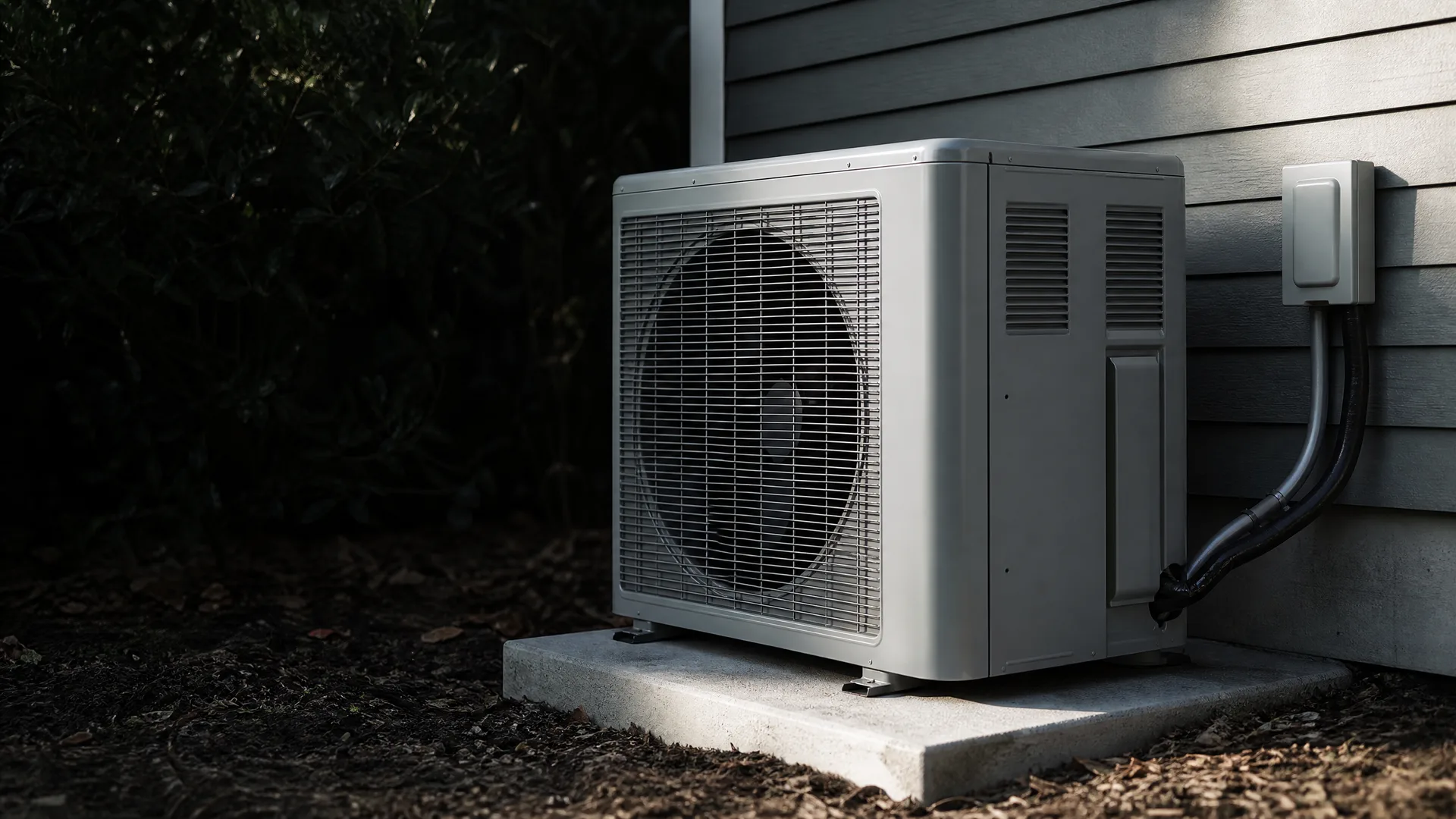
A heat pump that's had its coil cleaned and charge checked keeps the disconnect box and wiring running at the load they were built for.
Dirty fins and leaves piled against the base make the unit pull harder for the same cooling, and that strain lands on the compressor.
Tune-Up Versus No Tune-Up
With a tune-up
A contractor checks refrigerant charge against the system's spec, so it isn't cooling your house on less than it needs.
The outdoor coil gets cleaned, so the unit isn't pulling extra current to push heat through fins clogged with grass and dust.
Electrical connections get checked at the disconnect box, so a loose wire doesn't turn into a no-cool call in July.
The reversing valve gets tested, since that's the part that lets the same unit switch from cooling your house to backing up the furnace on cold nights.
Airflow across the indoor coil gets checked, so the system isn't straining against a restriction nobody noticed.
Without one
Refrigerant charge drifts with no one checking it, and the system runs longer to move the same amount of heat.
Dirt builds up on the outdoor coil unnoticed, and the compressor works harder against it every time the unit cycles on.
A loose electrical connection can sit for months before it causes a breaker trip or a dead unit on the hottest day of the year.
If the reversing valve sticks, you may not find out until a cold night when the heat pump can't help the furnace at all.
A restricted filter or blocked return goes uncaught, and the system pulls against it all summer without anyone noticing the extra load.
1
The contractor checks airflow across the indoor coil first.
2
Refrigerant pressures get measured against the manufacturer's spec.
3
The outdoor coil fins get cleaned of grass and debris.
4
Electrical connections and capacitor readings get tested under load.
Does a tune-up check the reversing valve on my heat pump?
You've heard the heat pump outside make a clunk when the system switches over, and you're wondering if whoever does the tune-up actually looks at the part responsible for that, or just the stuff that's easy to get to. Since your heat pump backs up the furnace on cold nights, you want to know the part that lets it run backward actually gets checked.
Yes, the reversing valve gets tested as part of the tune-up
The reversing valve is what lets your heat pump switch between cooling the house in summer and pulling heat in from outside on cold nights. A contractor checks that it shifts fully when the thermostat calls for the switch, since a valve that only partly shifts can send refrigerant the wrong direction or leave the system stuck in one mode. They also check for the clunk or hiss it makes when it moves, since a valve that stays silent or hangs partway often means a weak solenoid. Catching that in a tune-up matters more in Oklahoma than it might elsewhere, since most homes here heat with gas and only lean on the heat pump's reversing valve on the coldest nights of the year.
Running clean
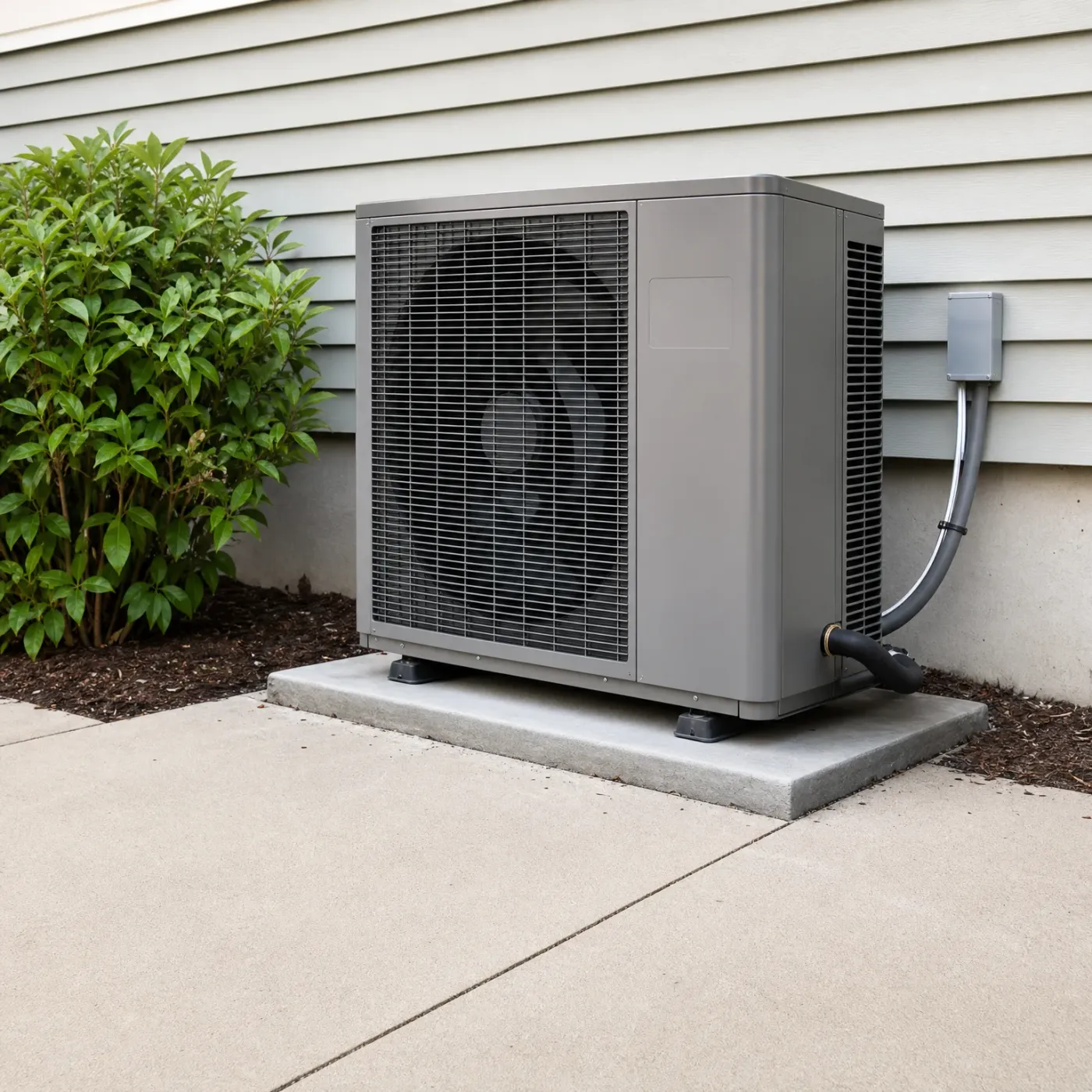
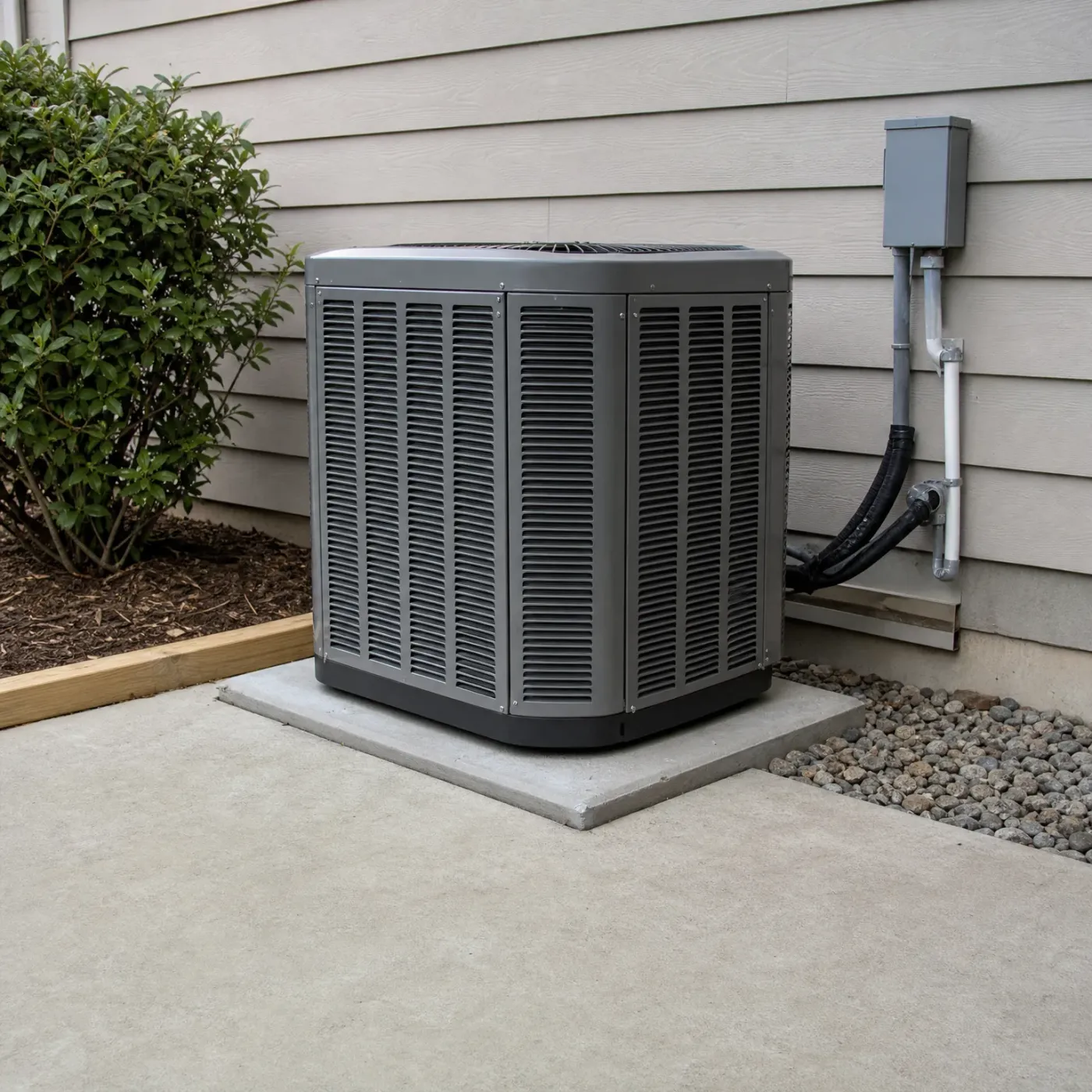
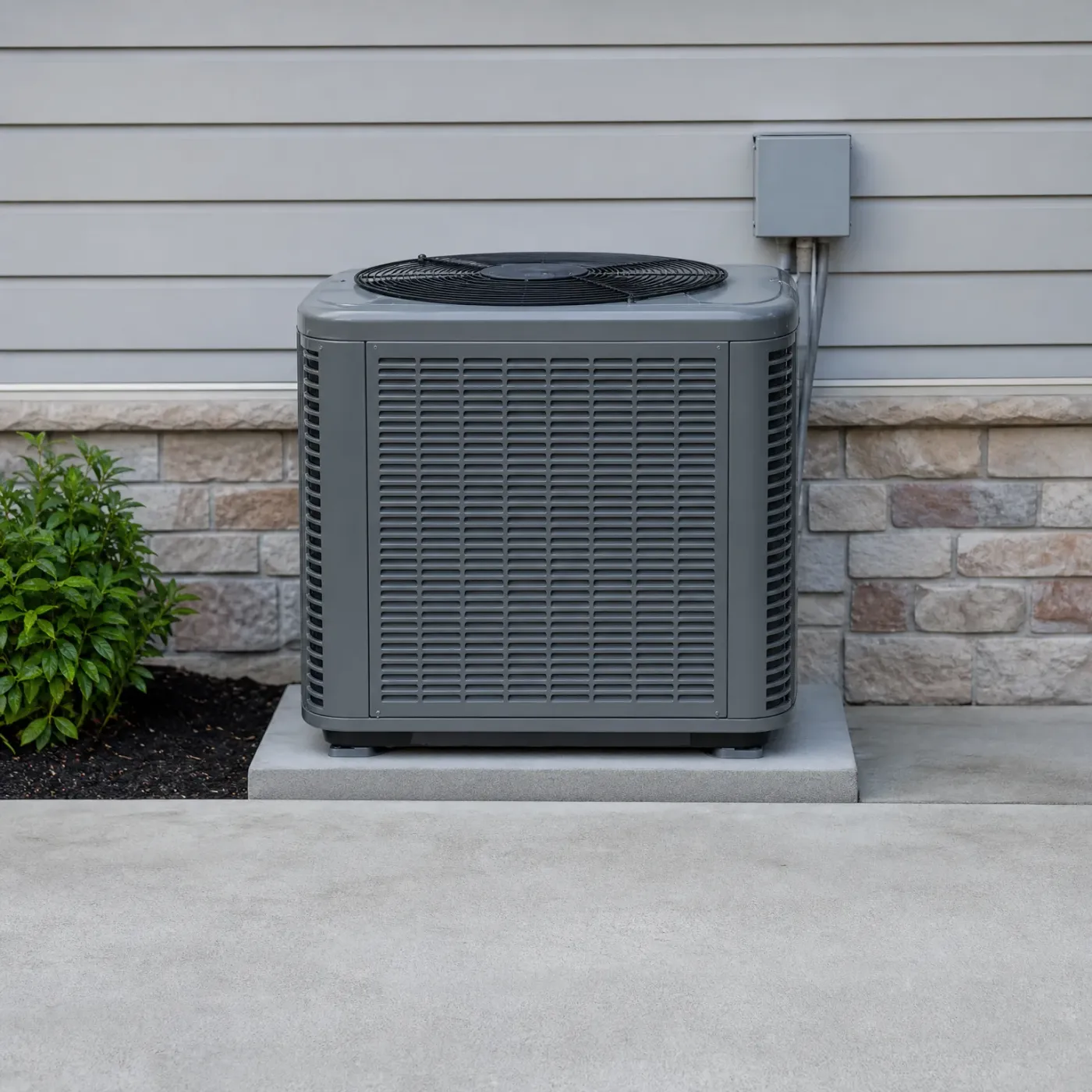
This is a heat pump keeping up with its load. The pad is clear, the coil fins aren't packed with mulch or gravel, and the lines running up to the disconnect box aren't carrying more current than they should. A unit maintained like this is cooling your house on the charge and airflow it was built for.
Running strained
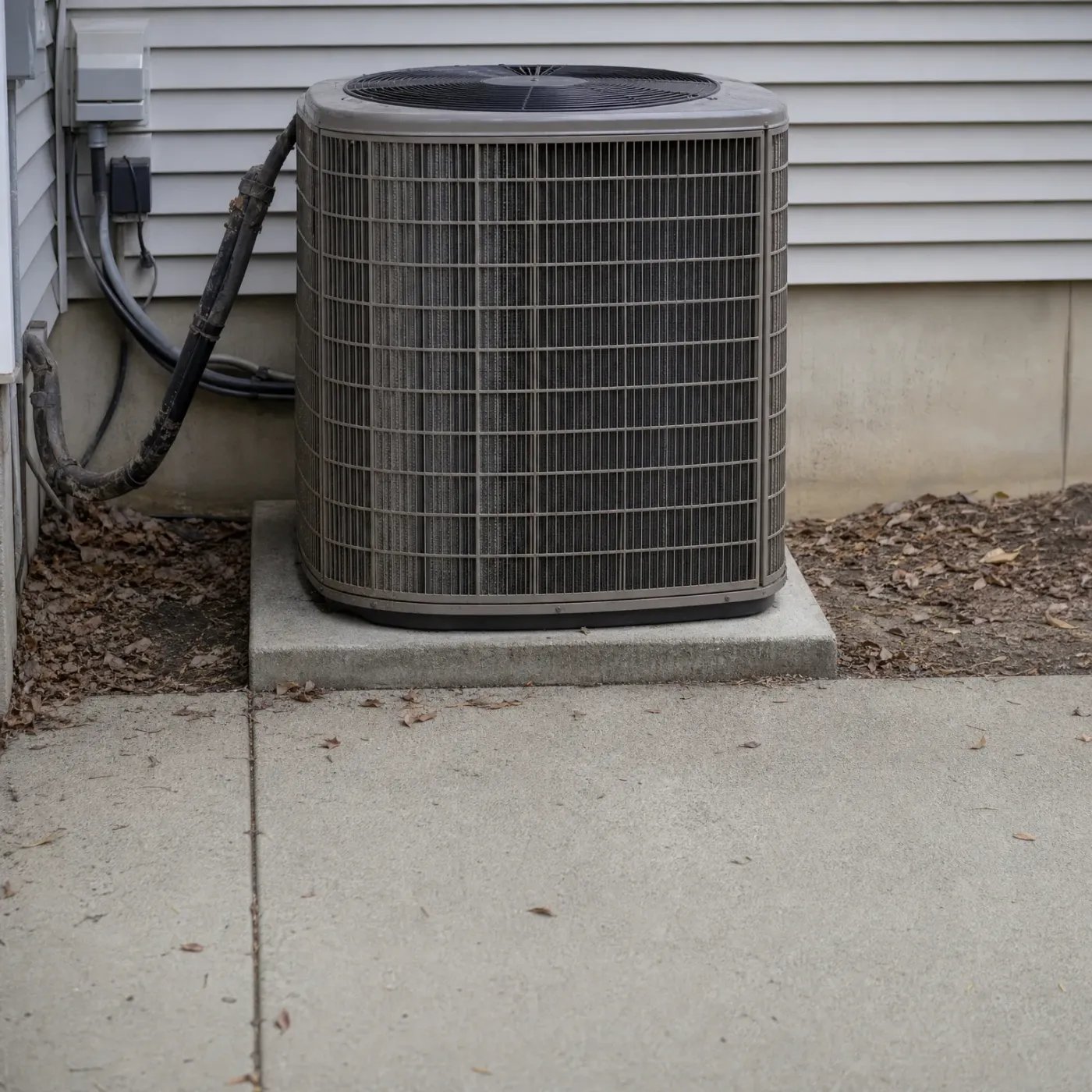
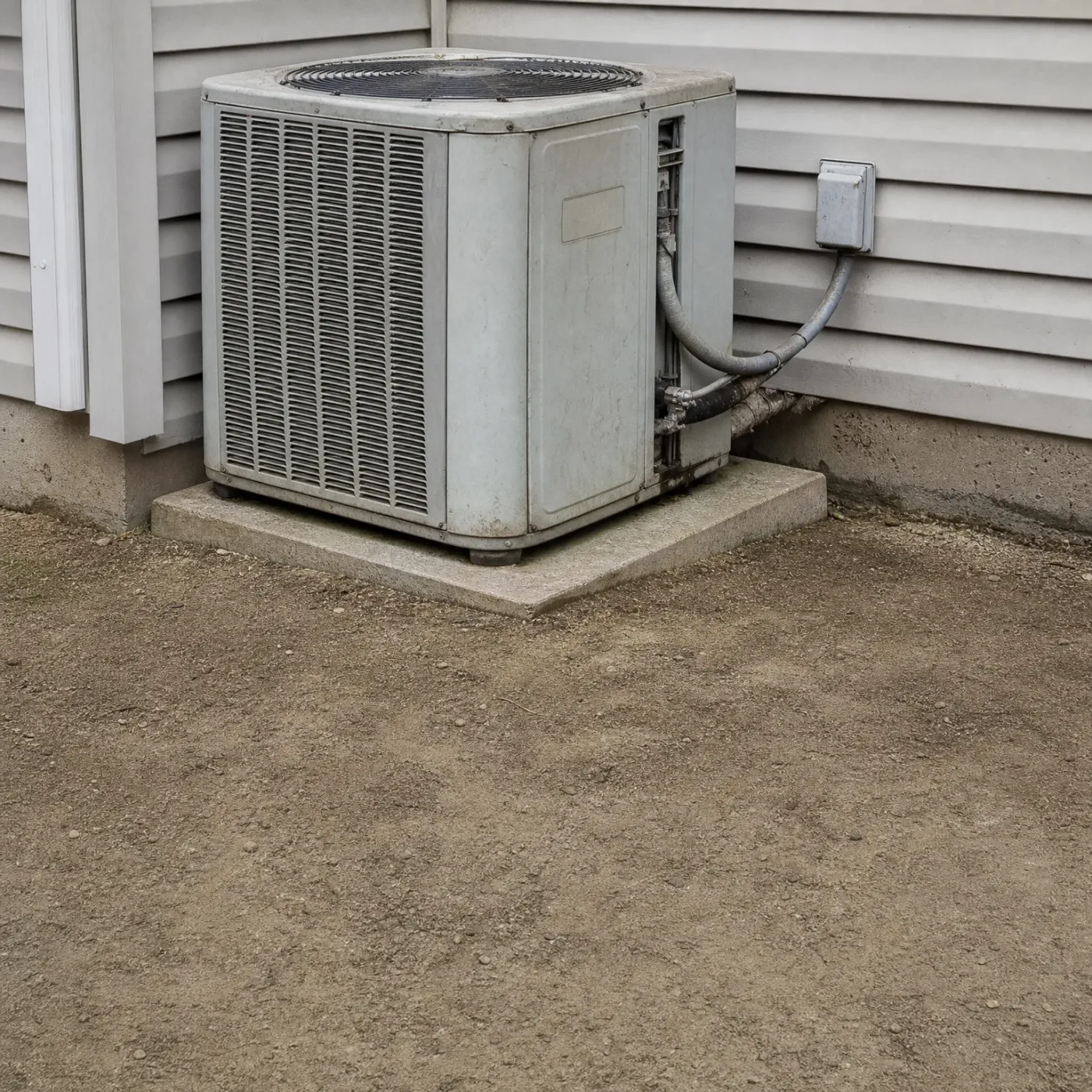
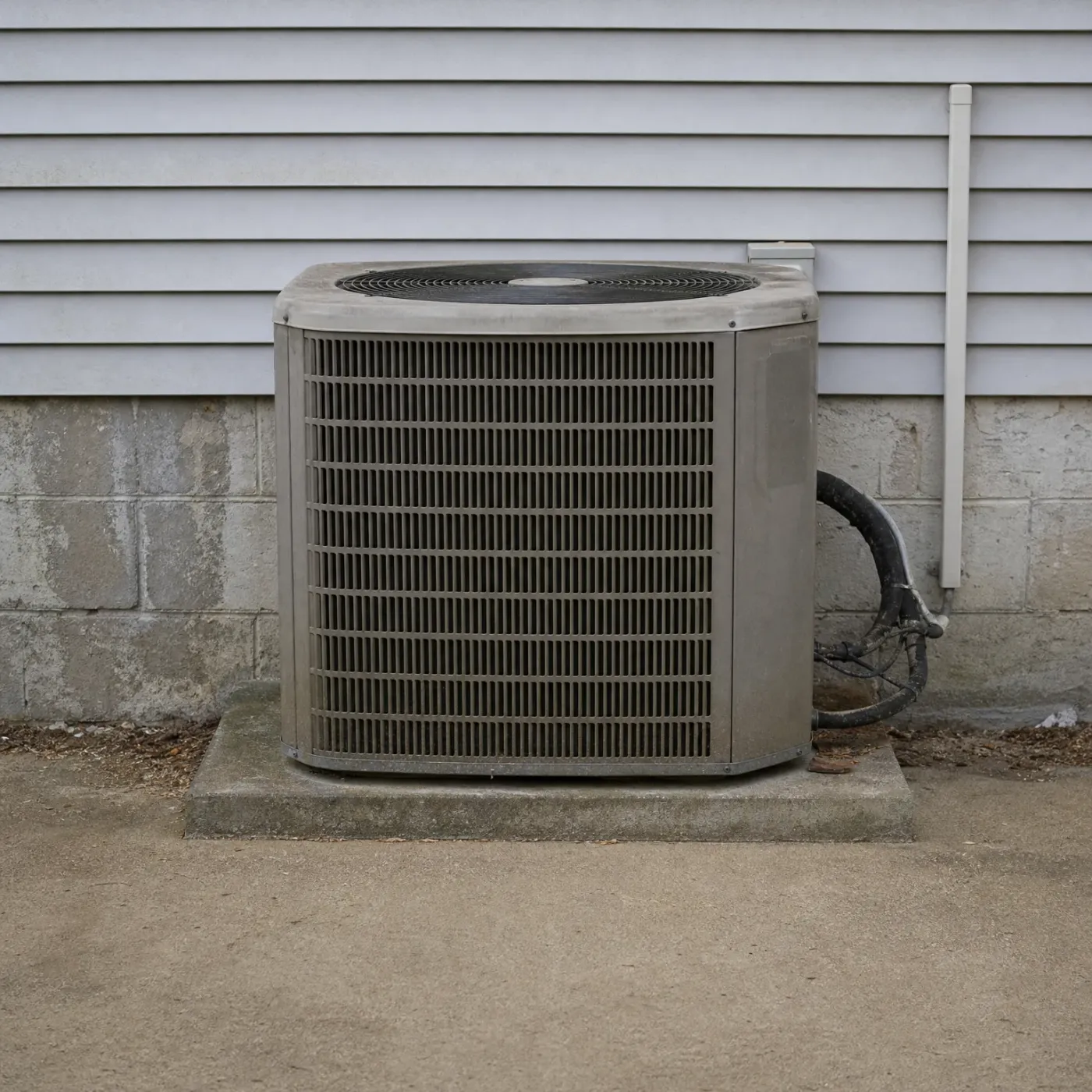
Weathering like this on the cabinet usually means years of dirt and debris never cleared off the coil. The unit still runs, but it's pulling harder to move the same amount of heat, and that extra load works its way into the wiring and the disconnect box over time.
Before you get your heat pump maintenanceAfter you get your heat pump maintenance
Let someone else find the pro
Fill out one form instead of calling around for a heat pump tune-up.
Send the form and the heat pump tune-up stops being something to remember.
Power costs 13.21 cents per kilowatt-hour statewide
At 13.21 cents per kilowatt-hour, every bit of extra current your heat pump pulls shows up on the bill. A unit low on refrigerant or dragging dirty coils draws more just to hold the house at the same temperature. A tune-up is what keeps it pulling only what the job actually needs.
EIA-861 2025 statewide residential average
What a skipped tune-up costs you at home
If your heat pump has been skipped a season or two, you'll likely notice it before anyone tells you why. The house takes longer to cool on the muggy afternoons, the outdoor unit runs longer to get there, and the bill reflects both. If it's also your backup heat on the coldest nights, a system that's been straining all summer isn't in better shape for that job.
You don't have to figure out who in Oklahoma works on heat pumps, call around to see who answers, or explain the same thing three times to three different companies before you can compare what they'd charge. Send the form once and that search is done. What's left is the actual visit, the contractor looking at your specific unit on your pad, which no amount of calling around does for you ahead of time.
A dew point averaging 66°F across June, July and August means the air itself is holding a lot of moisture before your heat pump does anything with it. That's the load a tune-up is checking against. A heat pump doesn't just drop the temperature, it has to pull moisture out of the air across the indoor coil, and a coil that's dirty or short on refrigerant can't wring out as much of it. You feel that as a house that stays clammy even once the thermostat says it's cooled down. Source: NOAA climate normals.
NASA POWER T2MDEW county cells weighted by homes
Is your heat pump keeping up this summer?
You notice it in small ways first. The house holds at 76 instead of hitting 72, or it gets there but the outdoor unit runs long after it should have shut off. Maybe there's a hiss near the lines, or the air coming out of the vents feels less cold than it used to on a sticky afternoon. Some homeowners hear a clunk when the system switches between heating and cooling. None of this means the unit is done. It usually means something inside it, the charge, the coil, a worn connection, is making it work harder for less. Left alone through another Oklahoma summer, that strain is what turns a small problem into a system that fails on the hottest day of the year.
What a tune-up comes down to
A tune-up checks refrigerant charge, coil cleanliness, and electrical connections against what the system was built to handle.
A heat pump working within those specs cools your house on less power and backs up the furnace without strain on the coldest nights.
Skipping it shows up as longer run times and higher bills before anything actually breaks.
Finding a contractor, checking licenses, and comparing quotes is the part that takes evenings you don't have to spend that way.
One form replaces the calls, the explaining the same problem twice, and the sorting through estimates.
What the system needs stays the same either way: a charge that matches spec and a coil that isn't fighting for airflow.
A heat pump tune-up in Oklahoma comes down to a short list: the refrigerant charge, the coil, the electrical connections, all checked against what the manufacturer built the system to handle. Nothing about that changes whether the unit is cooling your house in August or helping the furnace out on a cold January night. When those three things are in spec, the system draws the power it's supposed to and no more. When they're not, you don't get a warning light. You get a house that takes longer to cool, an outdoor unit that runs past when it should have shut off, and a bill that's higher before anything has actually failed.
Getting there is usually the slower part. You'd be calling around for a licensed contractor, explaining the same symptoms to each one, then sitting with a few quotes trying to tell a fair price from a padded one. That's the work a tune-up doesn't skip, but finding someone to do it doesn't have to take your evenings. One form gets that search off your plate. You're not rushing the job or the diagnosis, you're just not the one making the calls.
The system itself doesn't care how you found the contractor. It needs a charge that matches spec and a coil that can move air without fighting through dirt and leaves. Get that done, and the rest, keeping the house at 72 instead of 76, keeping the bill where it belongs, takes care of itself.