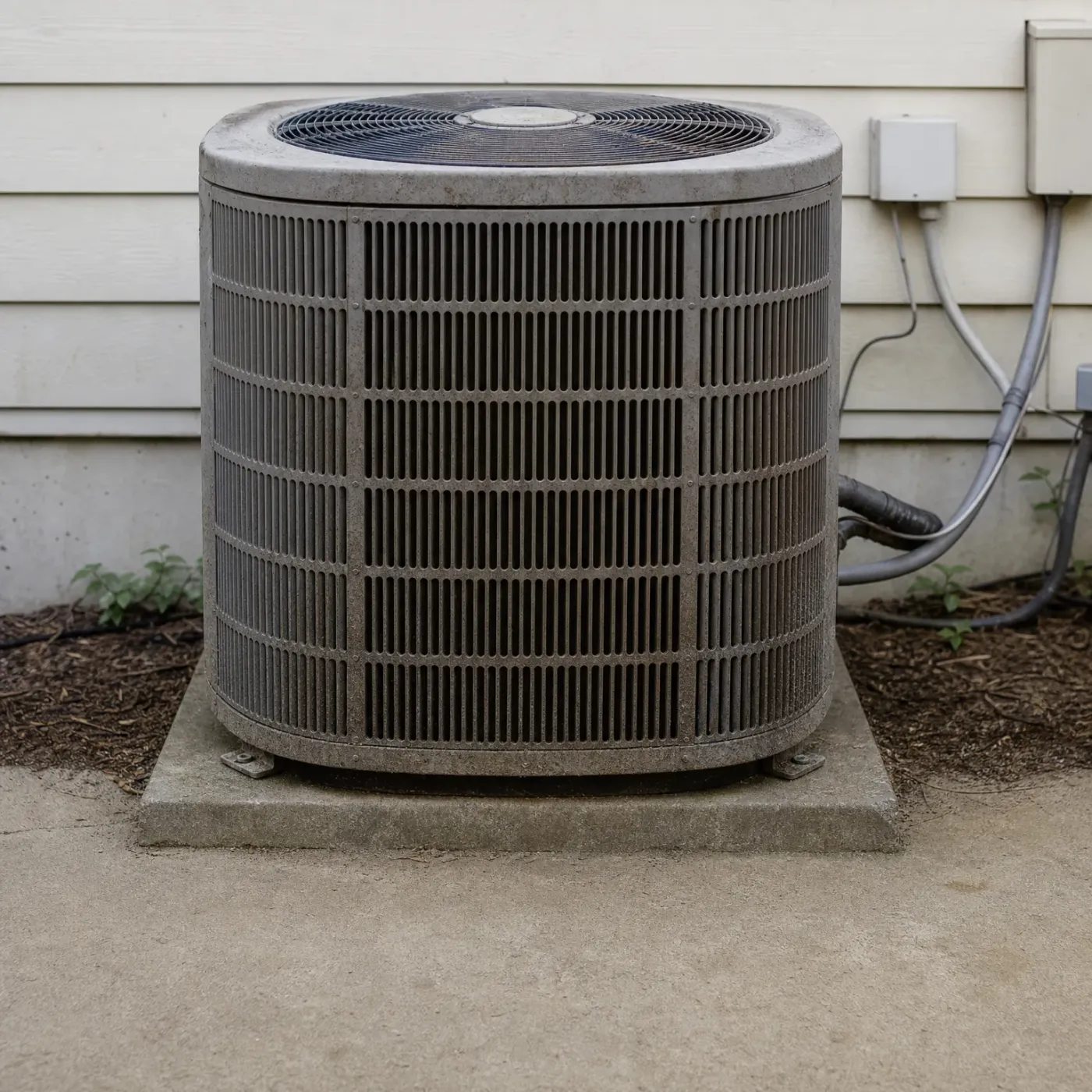
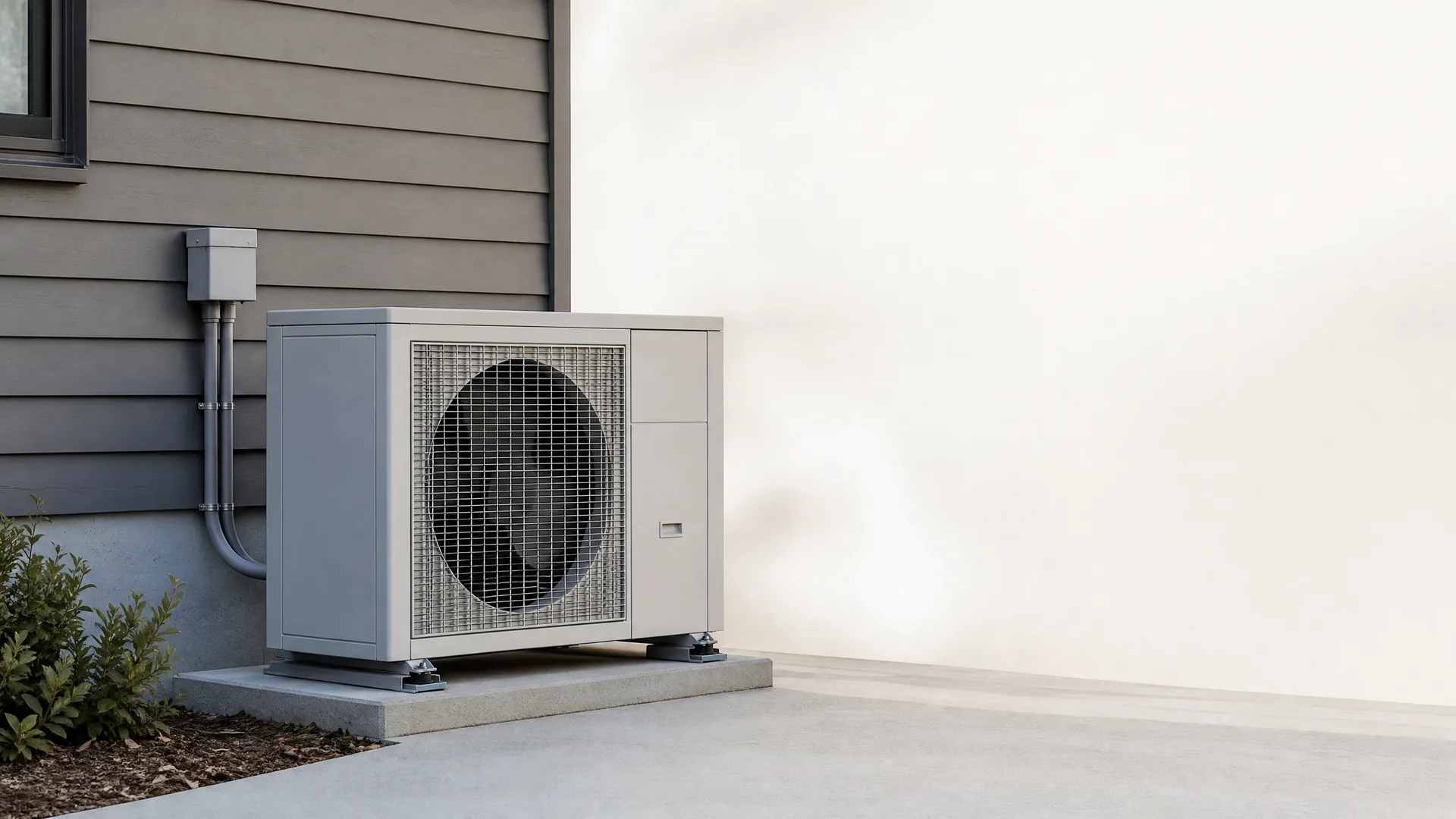
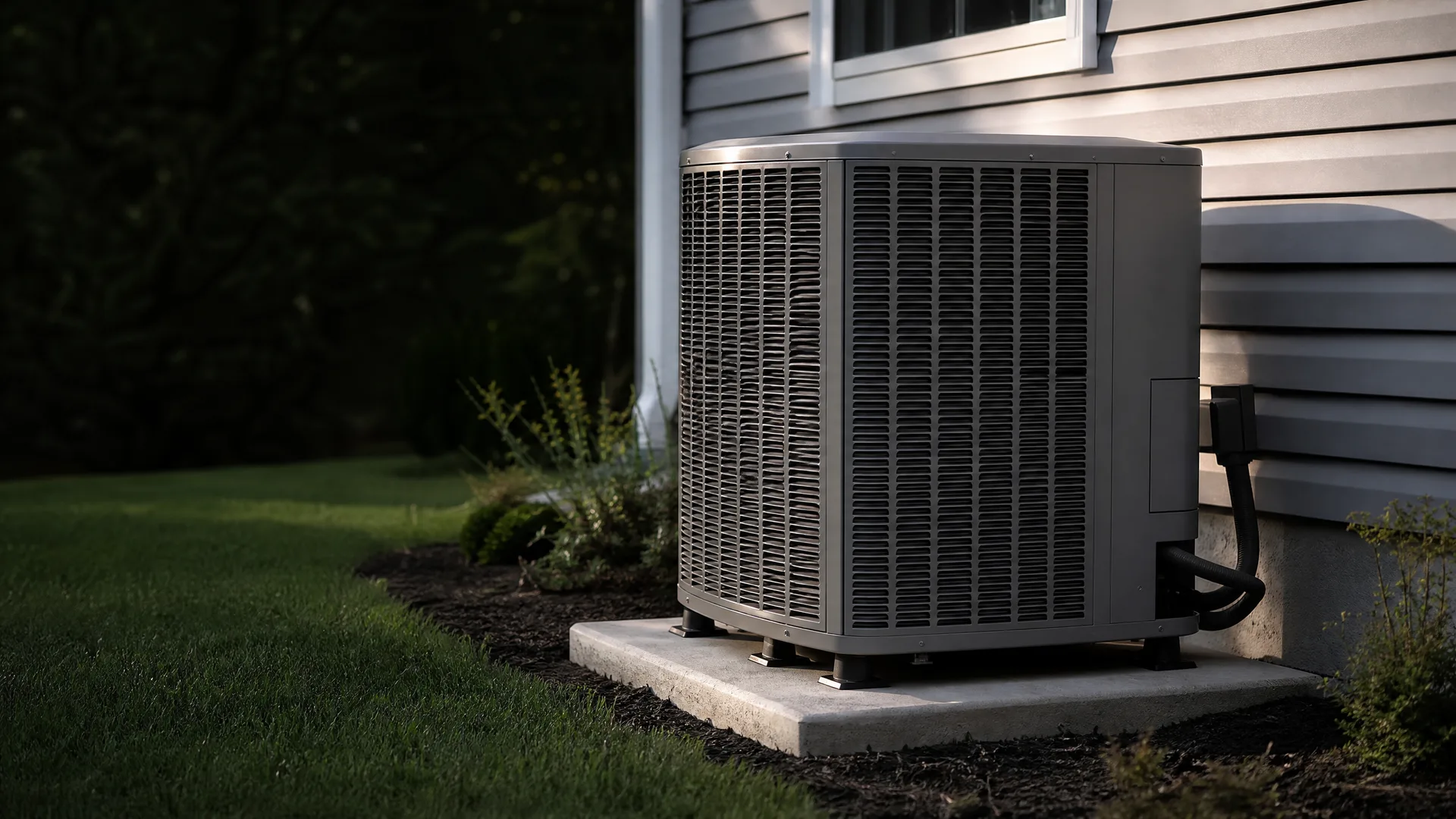
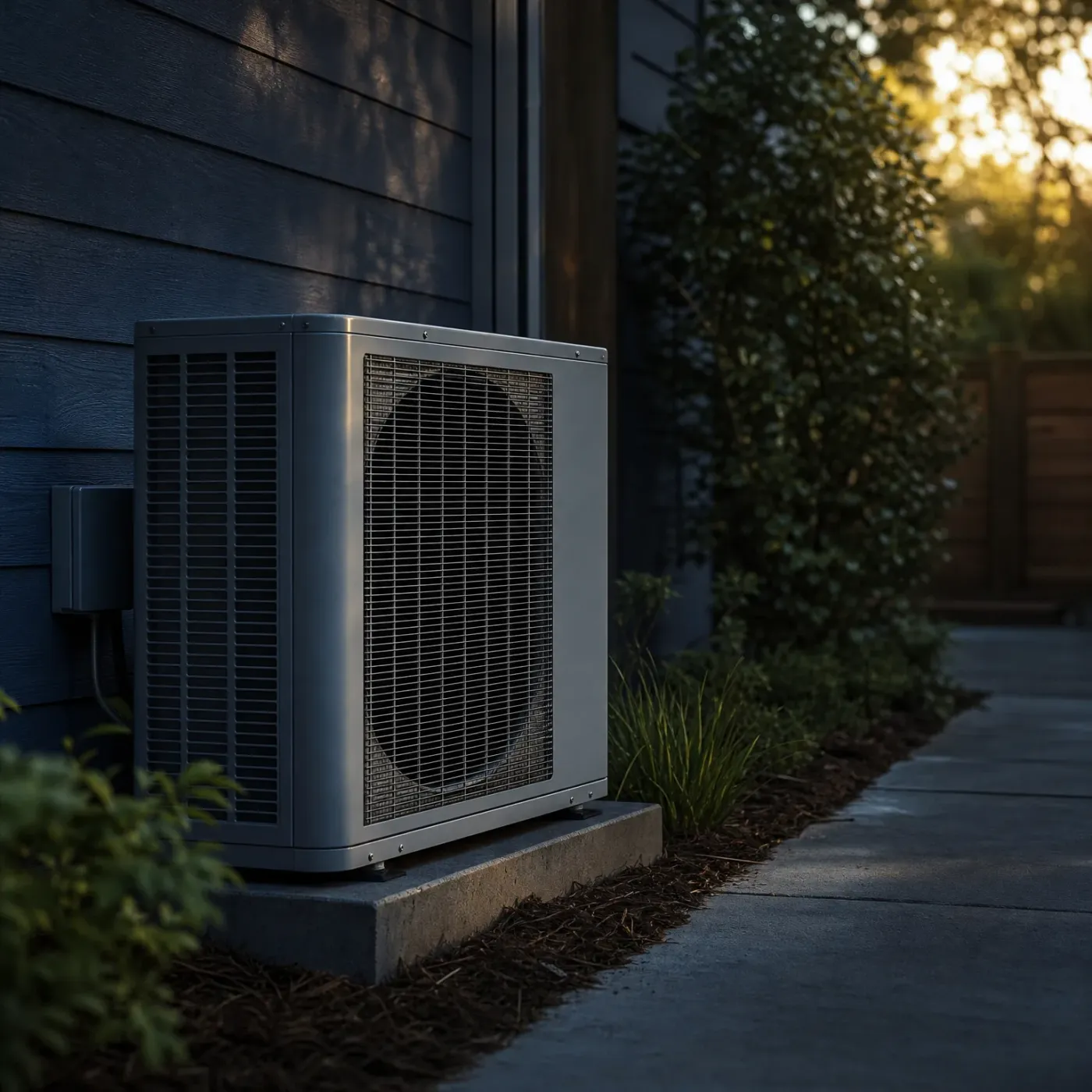
A gray outdoor heat pump unit on a concrete pad beside a dark horizontal-siding wall, with a small electrical box on the wall, shrubs and a concrete walkway to the right at dusk.

A pro who works on heat pumps

Why your heat pump won't turn on in Oklahoma

A heat pump that won't turn on in the middle of an Oklahoma summer or during a cold snap is more than an inconvenience, and with gas heat backing up most homes here, people often don't think about it until the system won't switch over. This page walks through what usually stops a heat pump from starting and connects you with a local contractor who works on these year-round.

Get my match

A heat pump that won't turn on usually comes down to power or controls, not the compressor itself. Check the thermostat first. If the screen is blank, a dead battery or a tripped breaker is the likely cause. If the thermostat has power but the system still won't respond, look at the breaker panel and any disconnect box next to the outdoor unit, since a tripped breaker there will shut the whole system down with no warning. Heat pumps also have a safety switch near the indoor air handler that cuts power if a drain line backs up, which happens more in summer here when the system runs long hours in the heat and humidity. If the outdoor unit is dead quiet and the indoor fan is too, the problem is almost always electrical rather than mechanical. That's worth knowing, because it means a technician can often find the cause fast once they're looking at the right panel.

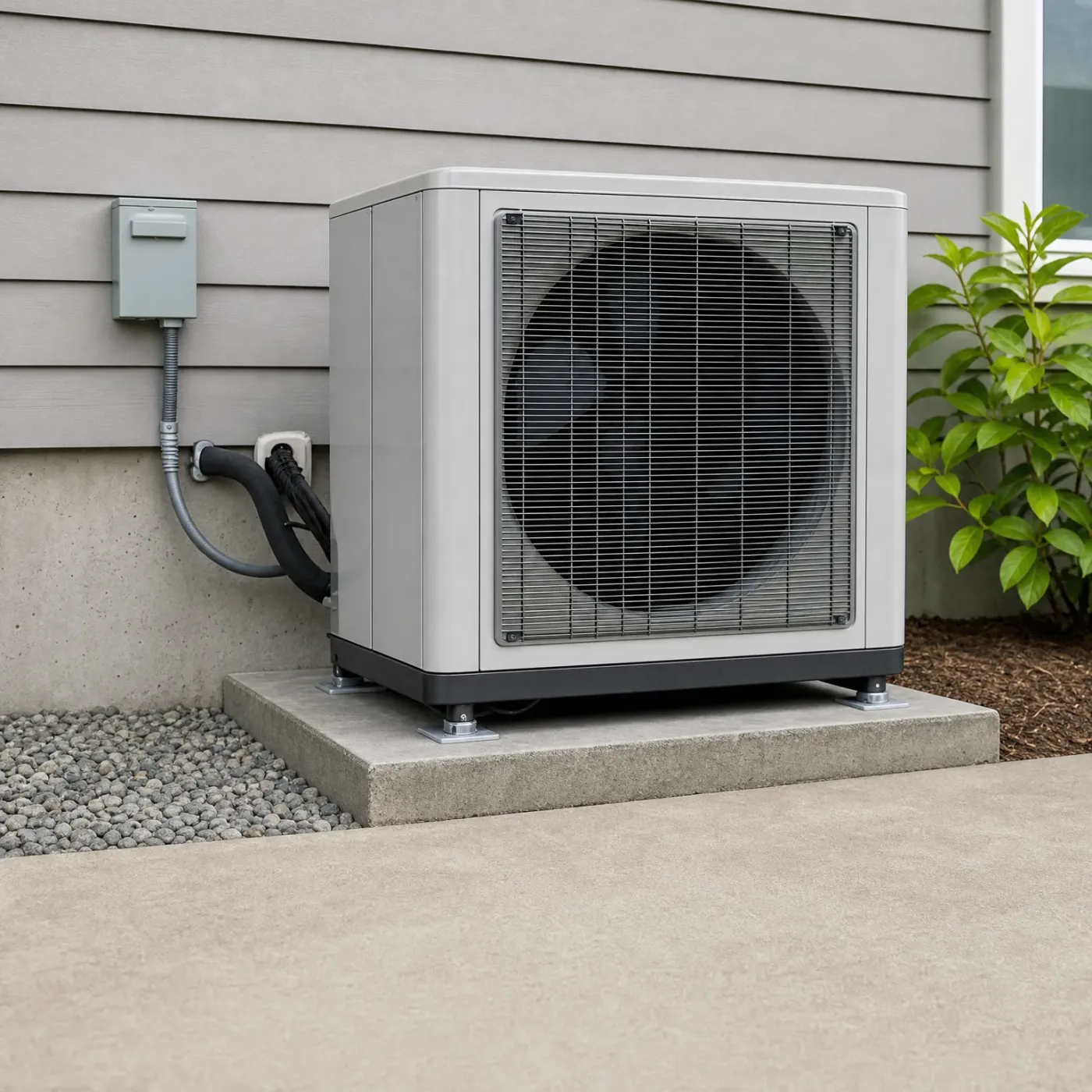
A light gray outdoor heat pump unit mounted on a concrete pad beside a house with horizontal lap siding, with refrigerant lines and conduit running to a wall-mounted electrical box, gravel and a leafy shrub nearby.

Running the way it should

The outdoor unit hums along, lines and wiring running clean from the condenser to the disconnect box on the wall. Air moves through it, the fan turns, and the thermostat call gets answered within a minute or two. Nothing to check, nothing to listen for.

An outdoor air conditioner condenser unit on a concrete pad beside a house with horizontal siding, with conduit, cables and an electrical box on the wall and mulch beds at either side.

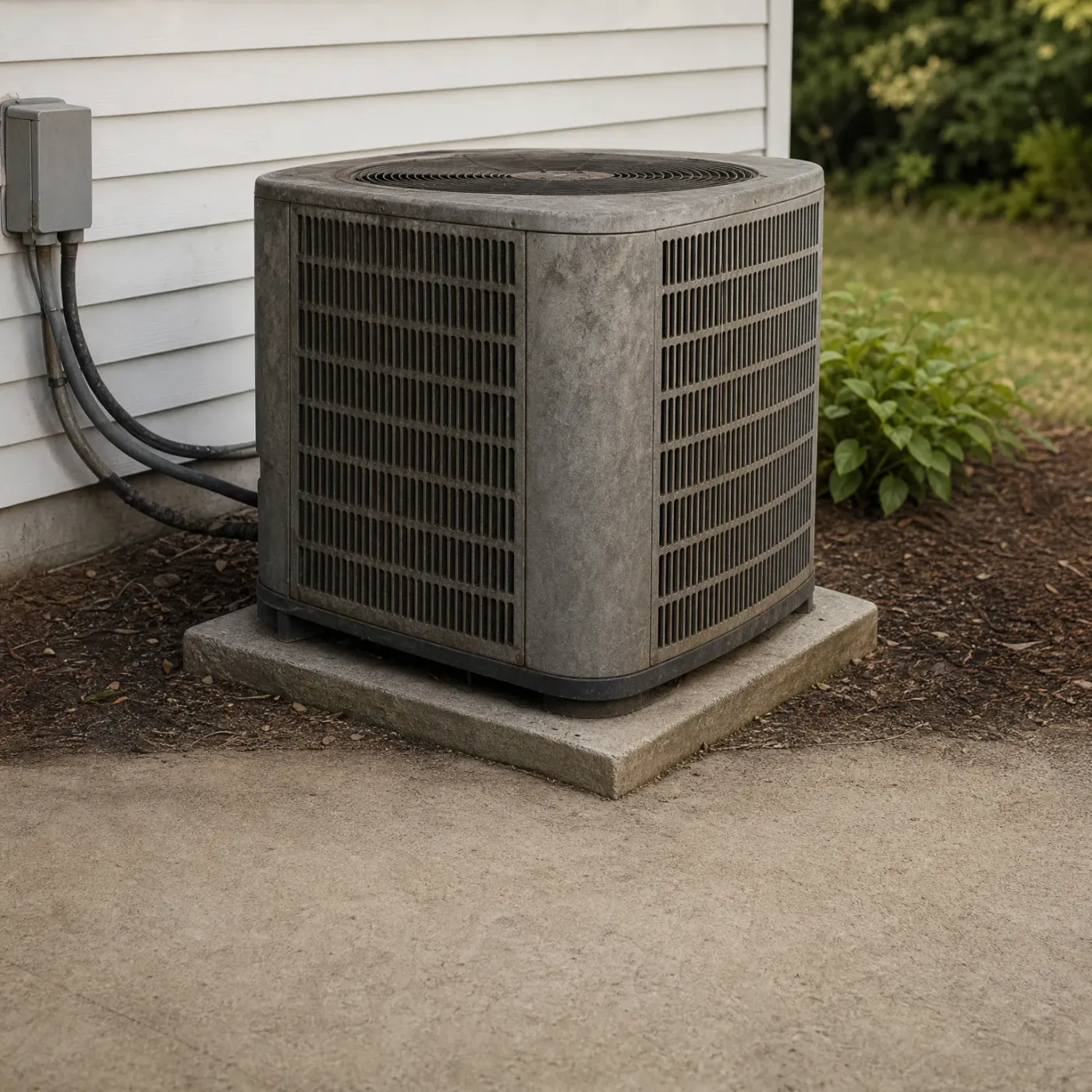
Caked in dust, not switching on

A unit like this one builds up grime on the cabinet over seasons of running, and if the coil underneath is just as dirty, the system can't move enough air to satisfy the thermostat. Combined with a tripped breaker or a bad capacitor, it may not start at all.

Is your house slowly getting too hot or too cold to live in?

You notice it room by room before you notice it on the thermostat. The air coming out of the vents feels like room temperature instead of hot or cold. The outdoor unit sits quiet when it should be running, or the indoor fan runs but nothing changes. In summer the house climbs a degree an hour until it's sticky inside even with the windows shut. In winter, if your gas furnace handles the cold and the heat pump only backs it up, you might not catch the failure right away, but the house still won't hold steady the way it should. Left alone, you're stuck without reliable temperature control until someone looks at it.

A woman with dark hair in a bun wearing a cream knit sweater sits on a gray sofa in a bright living room, looking off to the side.
A woman wrapped in a knit blanket sits on a gray sofa in a living room, looking toward a bright window with houseplants and an armchair in the background.
A woman in a gray cowl-neck sweater sits on a light sofa with cushions, smiling and looking to the side, with a kitchen and window visible behind her.
A woman with dark hair in a bun, wearing a light linen shirt, sits on a sofa and looks to the side, with a window, houseplants and a kitchen with pendant lights blurred behind her.
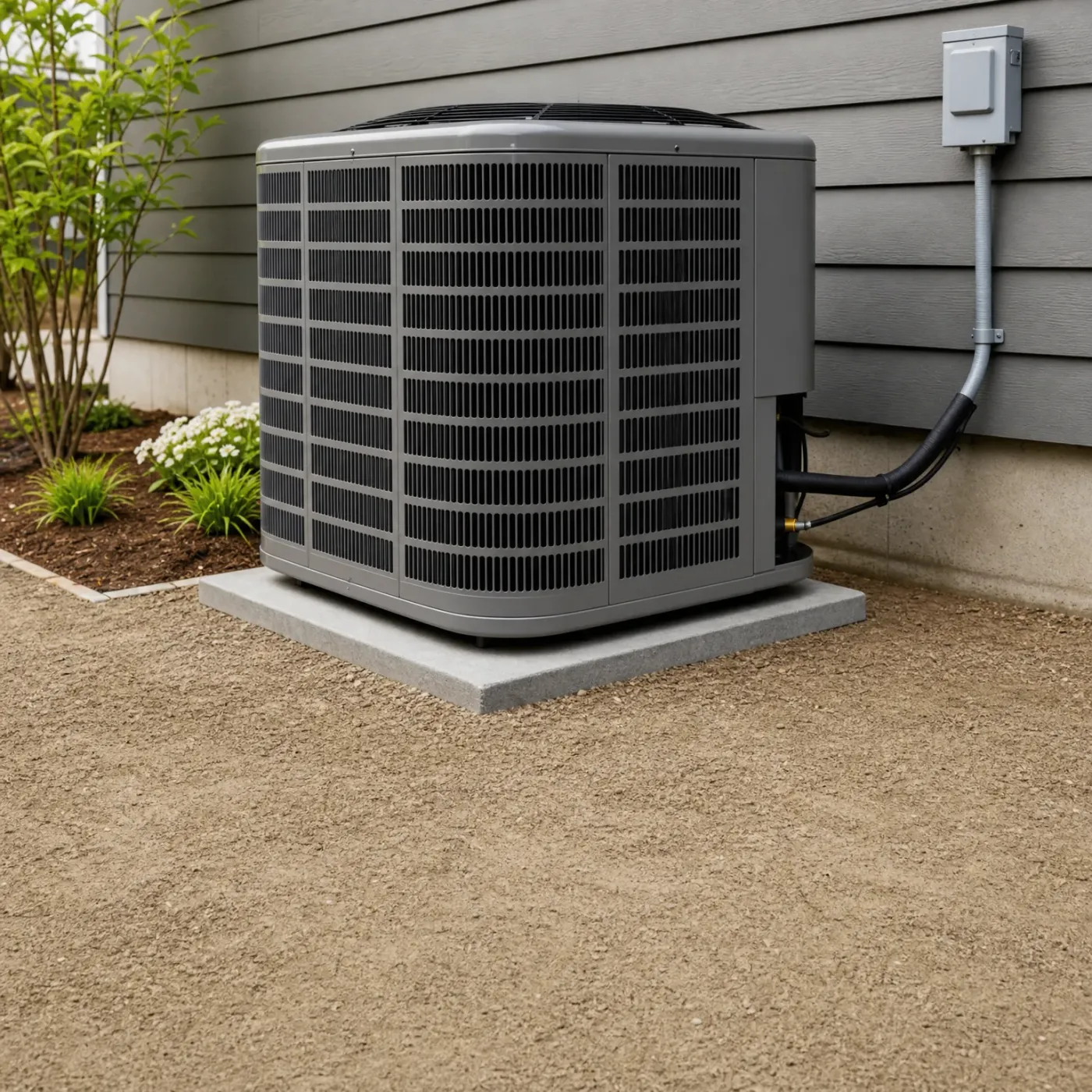
A gray outdoor condenser unit on a concrete pad beside a house with horizontal lap siding, with an electrical disconnect box and insulated refrigerant lines on the wall, gravel in the foreground and a planting bed at left.
The fins are clean and the base is clear, so air pulls through the coil the way it needs to.
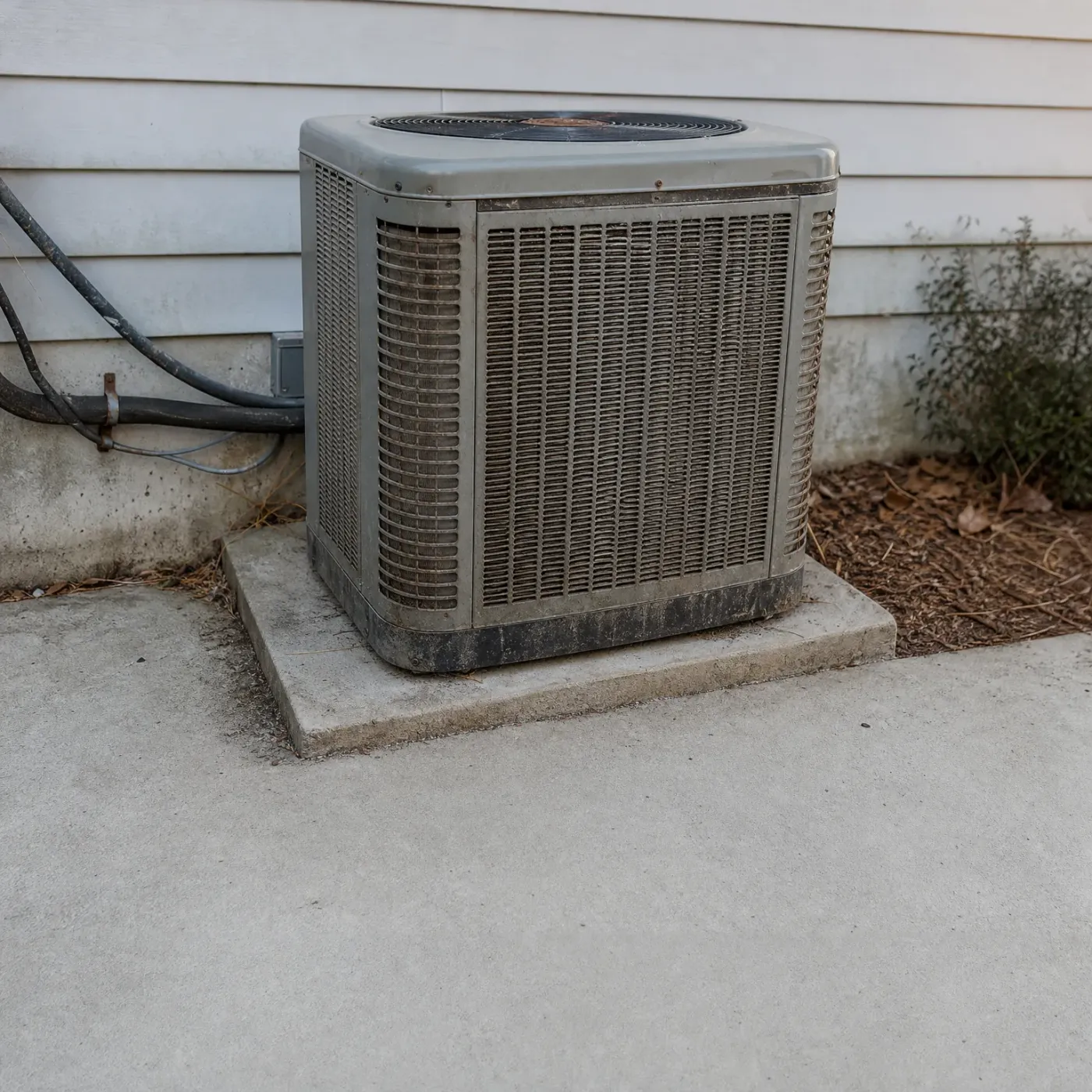
A weathered gray outdoor condenser unit sits on a concrete pad beside a house with horizontal siding, with refrigerant lines entering the wall at left and a mulched shrub bed at right.
Dirt packed into the fins and grime on the base block airflow and can keep the unit from starting at all.

Behind the thermostat there's a chain of parts that all have to work for the system to start. A small transformer steps power down to 24 volts to run the thermostat and controls, and if that circuit shorts, nothing on the screen will light up at all. From there, a set of control wires carries the call between the indoor air handler and the outdoor unit. A break anywhere in that run, and the compressor never hears the request to turn on. Inside the outdoor unit, a contactor closes to send power to the compressor itself, and worn contacts on that relay are a common reason it just sits there. The reversing valve decides whether the system heats or cools, and when it sticks, the unit can stay quiet even with full power running to it. There's also a defrost control board watching the outdoor coil on a timer, and a safety switch that can cut power the moment it senses a fault, with nothing showing on the thermostat to explain why. Any one of these can stop a heat pump cold, and it rarely shows which one from the house.

What's Actually Happening Inside the System

  • A low voltage transformer sends 24 volts from the air handler to the thermostat, and if that circuit shorts the whole system stays dark.
  • The outdoor unit and the indoor air handler share a set of control wires, and a break anywhere along that run keeps the call from ever reaching the compressor.
  • A reversing valve tells the system whether to heat or cool, and a stuck valve can stop the unit from responding even when power is fine.
  • The defrost control board checks the outdoor coil temperature on a timer, and if that board fails the unit can lock out rather than start.
  • A safety switch on the air handler or outdoor disconnect will cut power on its own if it senses a fault, with no warning on the thermostat screen.
  • The contactor in the outdoor unit is a small relay that closes to send power to the compressor, and worn contacts there are a common reason it never does.
An older woman with gray hair in a bun and glasses, wearing a beige knit sweater, smiles while looking to the side in a warmly lit kitchen, with a loaf of bread on the counter in the foreground and a snowy scene outside the window.
A woman and a child wrapped together in a knitted gray blanket on a couch, with the child's head resting on her shoulder and a lit table lamp and houseplant in the background.

The breaker trips for a reason

A heat pump pulls a hard jolt of current when the compressor starts, more than most other things on that circuit. If the breaker trips once and resets fine, that can happen on a hot day and not mean much. If it trips again within a day or two, something is drawing too much current, often the compressor itself or the start capacitor that helps it kick on. Resetting the breaker over and over without finding out why just wears down a part that was already struggling, and eventually it won't reset at all.

The reversing valve switches modes

A heat pump uses one part, the reversing valve, to switch between cooling your house in July and heating it in January. That valve gets a signal from the control board every time the system changes direction. If the valve sticks or the solenoid that moves it fails, the system can lose power entirely instead of just running in the wrong mode, especially right at the point in spring or fall when you first ask it to switch. That timing is why some calls come in right at the changeover.

An outdoor air conditioning condenser unit sits on a concrete pad beside a white horizontal-siding house, with a gray electrical disconnect box and insulated refrigerant lines on the wall, mulch and green shrubs to the right, and a concrete slab in the foreground.
Before you get your heat pump repair
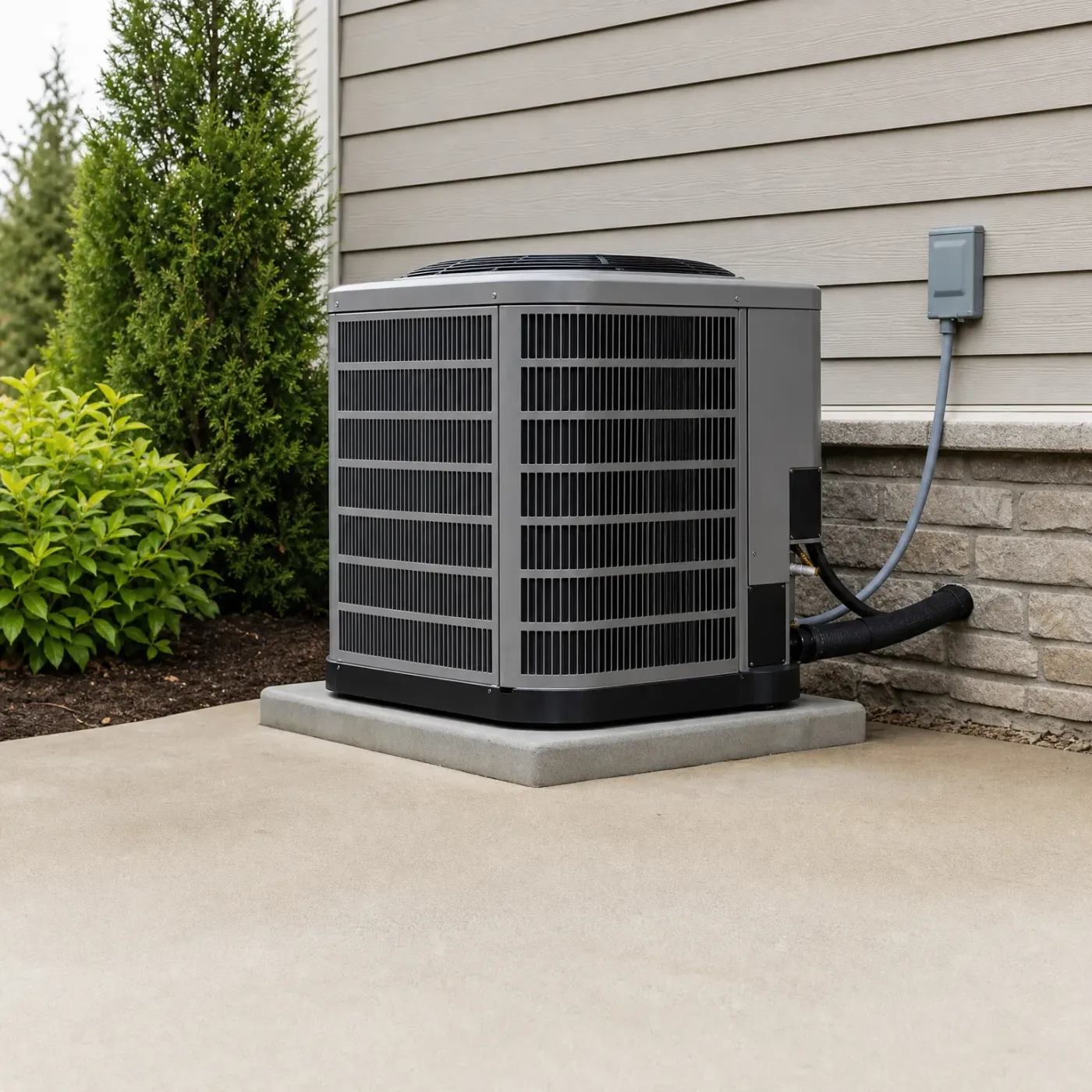
A gray outdoor air conditioner condenser unit on a concrete pad beside a house with horizontal lap siding and a stone veneer base, with a conduit running to a wall-mounted disconnect box and shrubs and evergreen trees to the left.
After you get your heat pump repair
A single-story gray horizontal-siding house with multiple front-facing gables, white-trimmed windows, a dark front door, and a concrete walkway crossing a partly dry lawn under a clear blue sky.

That muggy feeling isn't in your head. Summer air in Oklahoma carries a dew point around 66°F on average across June, July and August, based on NOAA climate normals. Your heat pump has to pull that moisture out of the air along with the heat, which means it runs longer to get the house comfortable. A system that's already struggling to start, whether from a stuck contactor or a weak capacitor, feels that load the most on the muggiest days. If yours won't kick on at all, getting matched with a local contractor who works on heat pumps all summer means someone who's already seen what this humidity does to these units, not a string of calls from companies guessing over the phone.

NASA POWER T2MDEW county cells weighted by homes

Get your heat pump to the right pro

Only one pro gets your request, so you hear from one company.

Asking costs nothing, and the choice to hire stays yours.

A gray outdoor heat pump unit on a concrete pad beside a house with gray horizontal siding, with conduit and an electrical box on the wall and a shrub at left.

Waiting it out until the weekend

A heat pump that won't start in July doesn't get better on its own. The compressor still won't answer the thermostat call on day three, and the house holds that same room-temperature air the whole time. If the cause is a tripped breaker that keeps tripping, every attempt to force it back on puts more strain on whatever is actually drawing that current down. The delay doesn't fix anything. It just adds days.

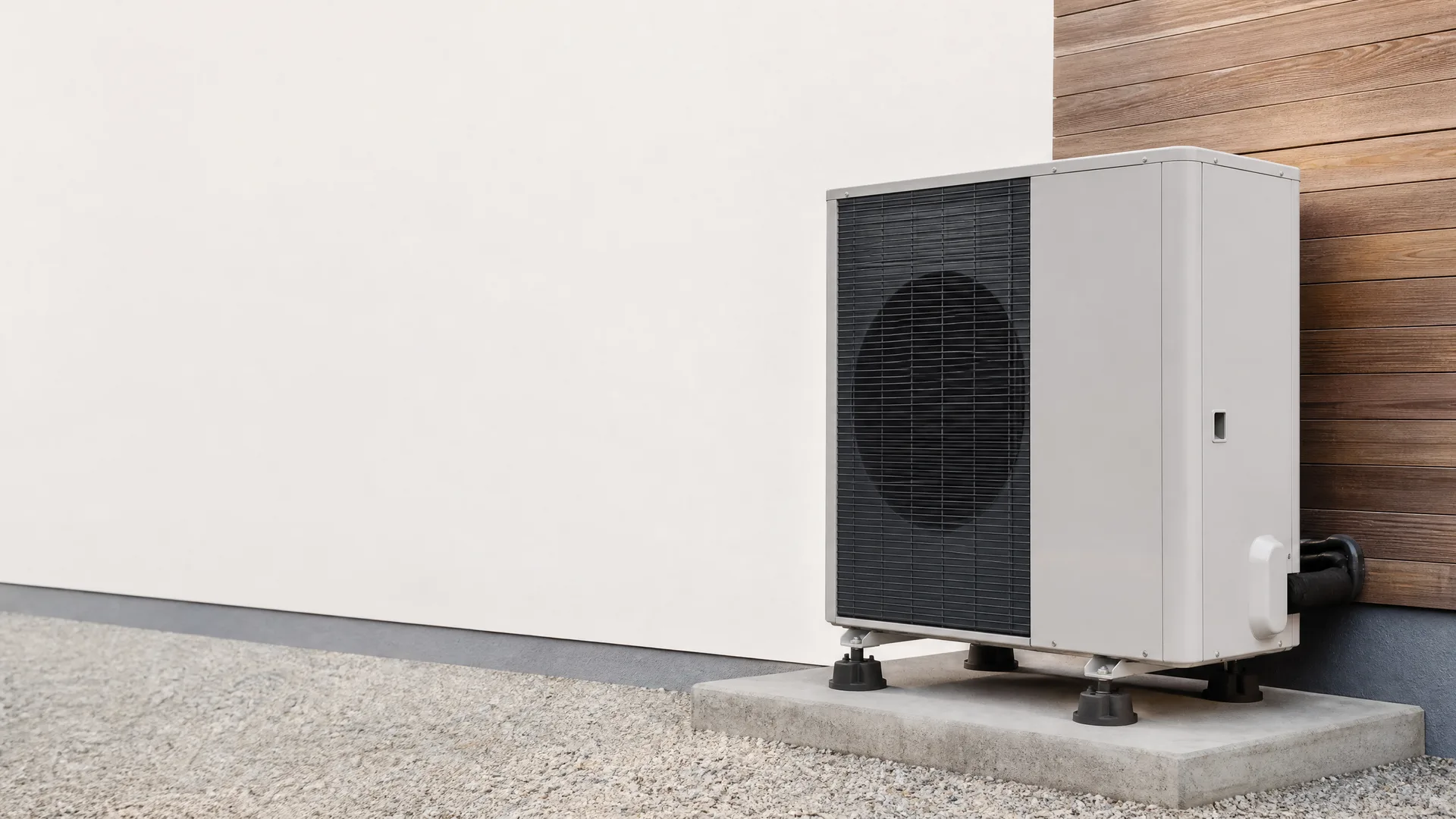
An outdoor air-source heat pump unit with a dark grille stands on a concrete pad beside a white wall and wood-clad facade, surrounded by gravel.

Getting a local contractor on it

A contractor who services heat pumps in Oklahoma all summer has seen the breaker trip from a failing capacitor more times than they can count, and they know which checks come first. You get matched with one contractor, not a handful calling at once, and they reach out knowing your equipment and your situation already. That's someone who can get the system answering the thermostat again instead of sitting quiet in the heat.

Power costs 13.21 cents per kilowatt-hour statewide

At 13.21 cents a kilowatt-hour, running a heat pump here doesn't punish your bill the way it might elsewhere. That's part of why gas heat is so common and a heat pump sits as backup in a lot of houses. When it won't turn on, you're often losing the cheaper way to heat or cool the house, not the only way.

EIA-861 2025 statewide residential average

  1. The thermostat calls for heat or cool and sends a 24 volt signal.

  2. That signal reaches the air handler's control board through the low voltage wires.

  3. The control board energizes the contactor in the outdoor unit.

  4. The contactor closes and sends power to the compressor and condenser fan.

Repair Now or Wait It Out

Calling for repair

  • A local contractor who works on heat pumps every season already knows the handful of things that usually cause a no-start, so the visit starts with a plan instead of a guess.
  • You get matched with one contractor, not several companies calling at once, so you're dealing with a single point of contact.
  • A licensed tech can test the low voltage circuit, the contactor and the breaker in one visit instead of you swapping parts to see what sticks.
  • If the fix is a stuck contactor or a blown transformer, those get replaced on the spot in most cases, and the system is back to answering the thermostat.
  • The gas furnace can keep carrying the load while the heat pump gets looked at, so the house doesn't sit without heat or cooling in the meantime.

Waiting on it

  • The breaker that tripped once can trip again on the next hot afternoon, and each reset is a guess rather than an answer.
  • A thermostat with no power or a broken control wire doesn't fix itself overnight or over a weekend.
  • With gas backing up most homes here, the heat pump can sit broken for a long stretch before anyone notices it never kicked back on.
  • Running the furnace or window units in its place costs more than the heat pump would at 13.21 cents a kilowatt-hour.
  • A small issue like a dirty coil or a loose wire tends to turn into a bigger one the longer the system sits unused.
  • Summer humidity doesn't let up while you wait, so the house keeps feeling damp and warm room by room.
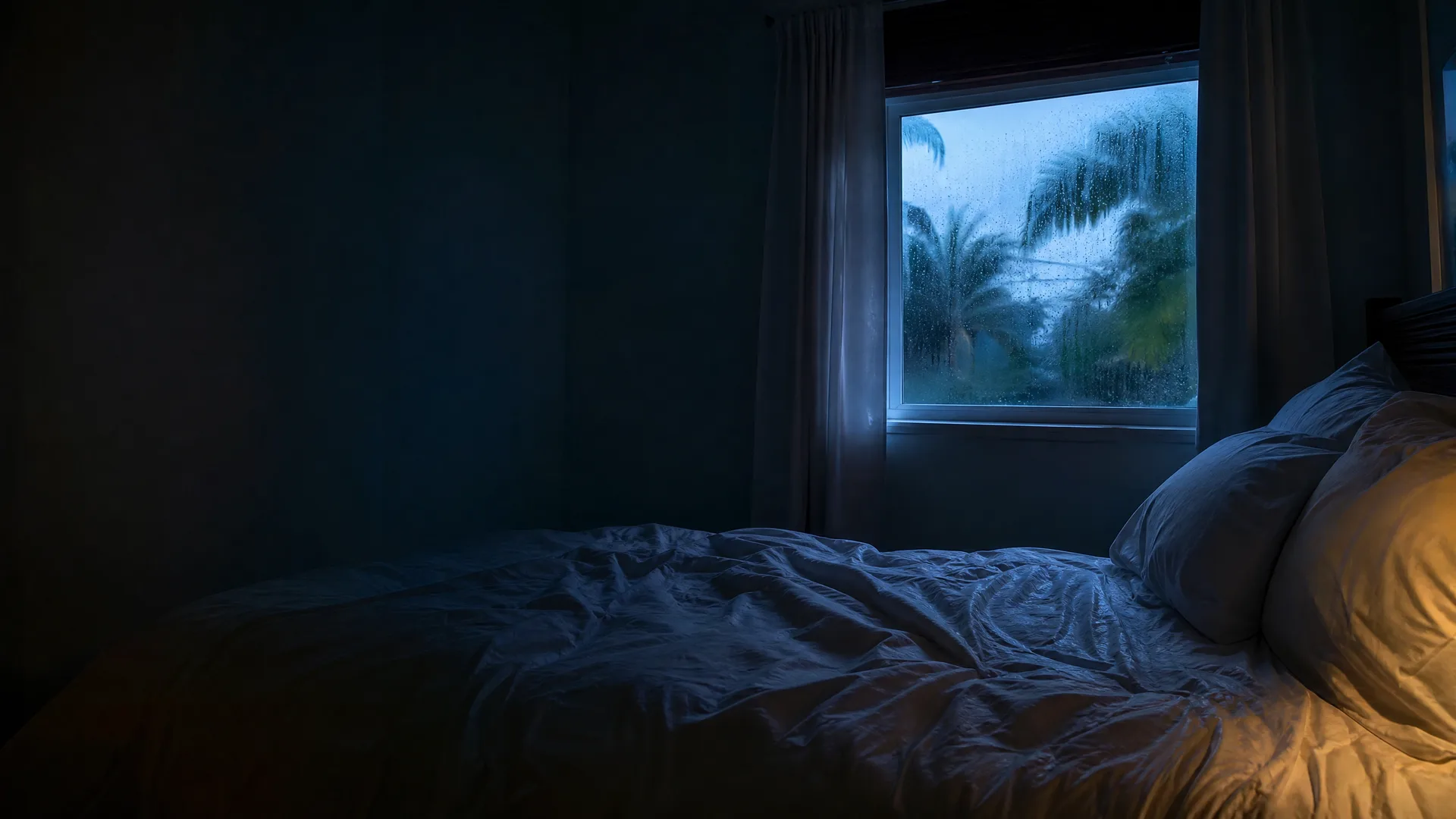
A dark bedroom with an unmade bed and pillows beside a curtained window showing rain-streaked glass and palm foliage outside.

It's past midnight and the sheets are stuck to your back. You kicked the top one off an hour ago and it's still sitting in a heap at the foot of the bed. The window unit of air isn't coming from anywhere, because it isn't a window unit, it's the heat pump, and it's not doing anything. You've gone out to the thermostat twice already. Outside, Oklahoma August doesn't let up after dark. The glass by the headboard has a thin fog of condensation along the bottom edge. You lie back down, turn the pillow to the cool side again, and listen for the outdoor unit to kick on. It doesn't.
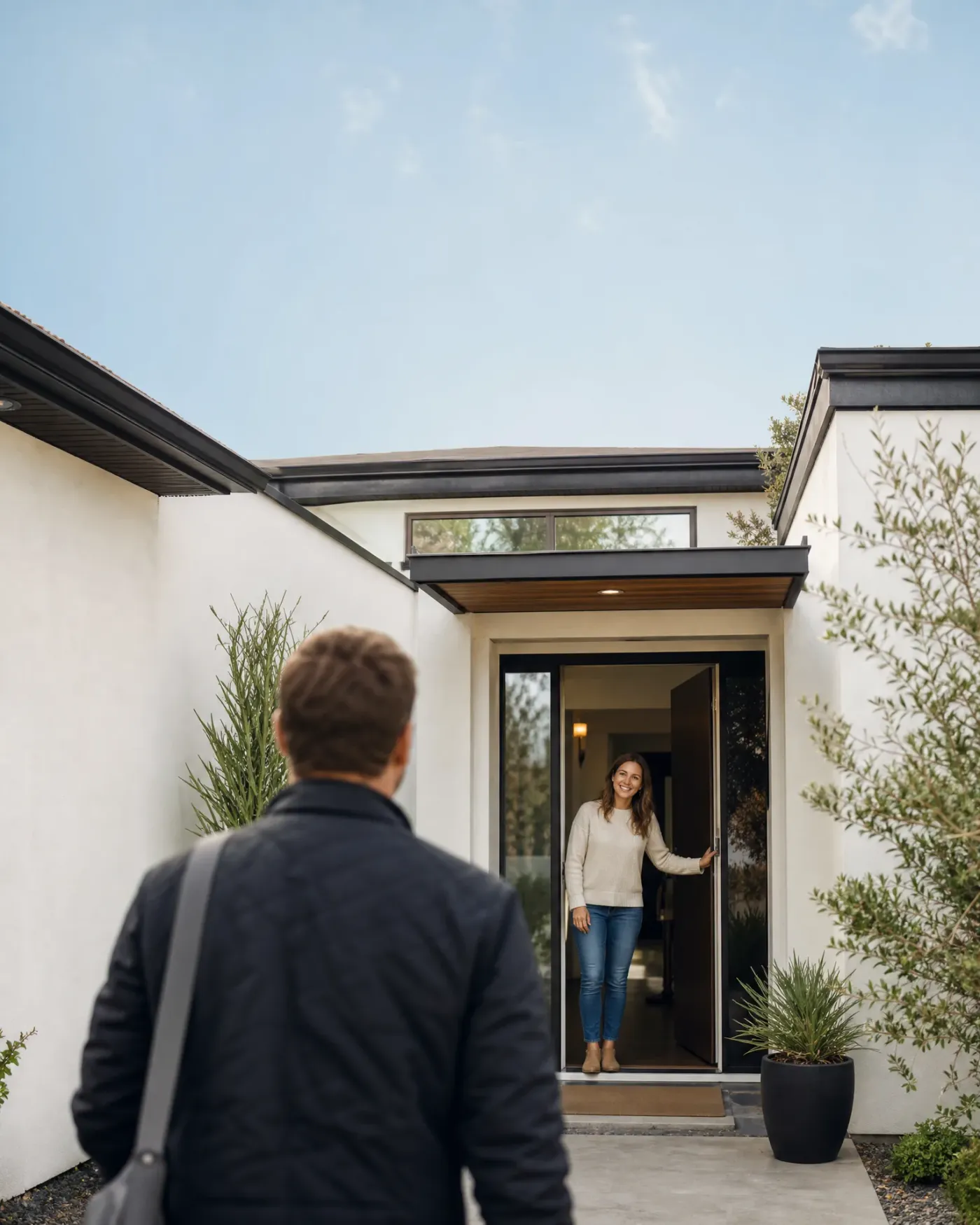
A woman in a cream sweater and jeans stands in the open doorway of a white stucco house, holding the dark door, while a man in a dark quilted jacket seen from behind walks toward the entry past potted plants.

A heat pump that won't start is almost always something a contractor can find fast

Most of the time, a heat pump that won't turn on traces back to power or controls: a dead thermostat battery, a tripped breaker, a broken low voltage wire, a dirty coil blocking airflow. The compressor itself is rarely the problem. Once someone's looked at the thermostat, the breaker panel and the outdoor unit, you usually know which one it is.

That's the point of getting a local contractor out rather than guessing room by room while the house sits too hot or too cold. You'll be matched with one contractor who works on heat pumps all summer and all winter here, so the visit isn't a cold start. They'll reach out to you directly, no list of companies calling at once, just the one who's already seen this exact no-start more times than you have.

Interior corner of a living room with a beige upholstered sofa and dark cushion in the foreground, a ceramic vase of leafy branches on a dark side table by a curtained window, a framed picture on the wall, and a wood-surround fireplace at right.
A gray outdoor condenser unit on a concrete pad beside a house with horizontal lap siding, bordered by mulch, shrubs and a mowed lawn.

The right pro for this job

Step 1 of 3: Equipment